
How I Stopped the Myth of Catastrophe After Cancer

Like so many other things at the time, it started small. Then, it grew into something bigger.
A tiny white spot had appeared on the side of my tongue. Decades earlier, this exact spot was the site of hairy leukoplakia, an opportunistic infection associated with HIV disease. The spot should have jolted me into action, but unable to handle more bad news, I just watched it grow. I was already carrying a heavy load of unseen anxiety, even before my diagnosis was official.
This unfolded during a chaotic period, just as the COVID pandemic had just ended. My husband was finishing up nine months of chemo for a stage 4 tumor in his colon. At the exact same time, we learned that we had to replace the entire sub-flooring of our home.
How did a diagnostic delay impact our family?
Scott's tumor started as a sharp pain in his abdomen when the pandemic first began. For months, doctors treated for a bladder infection. Each time, they gave him a stronger antibiotic for a UTI that didn’t exist. The pain grew, eventually becoming overwhelming. By the time an MRI finally revealed the truth, it was almost too late for him.
Our lives were in turmoil. We were living in a hotel while we fought with the insurance company over our floors. Scott was dealing with the aftereffects of chemo. Meanwhile, I was grappling with my own diagnosis of squamous cell carcinoma on my tongue and an HPV lesion in my rectum.

With the routines of my daily life interrupted, it was difficult to ground myself, and I didn’t fully grasp the gravity of the decisions I was making. When faced with choosing whether to treat my cancer or not, I was surprised that I had to choose at all. I naively thought the lesions were too small enough to be a real issue.
Why does cancer survivor anxiety hit after treatment ends?
I was relieved when my treatments ended, but I was not prepared for the long-term effects. It was a full year before my energy levels returned to normal. Two years later, my T-cells still had not returned to acceptable levels. During that time, I lost muscle mass and endurance that I am still working to regain.
But something else had happened as well. I began to expect the worst outcome in every situation.
It started with a small creak in the floor of my house that wasn’t there before. I was convinced my house was sinking. A bruise appeared on my arm, and I was confident it was the return of Kaposi's sarcoma. I was certain that the next MRI would show my insides riddled with lesions because of some random ache or pain in my midsection.
How do you break the cycle of post-cancer worry?
I couldn’t stop thinking about it. I couldn’t stop talking about it. I withdrew from life and the people around me. It felt like my whole world was constantly crashing, and even when there was nothing to worry about, I would sit and imagine endless scenarios of what could happen.
Existing in a constant state of anxiety wreaked havoc on my nervous system. Everything happening in my life set off alarms. Intrusive thoughts popped into my head all day long. I worried whether I had locked the house up or taken my medicine. Sometimes I would drive all the way back home to check a door or to take a second pill, just in case.
It became unbearable. I no longer felt safe in my life, and only I could change that. So, I started by making my world a calmer place.
- Decluttering my space: I moved the pile of insurance EOBs and doctor bills off the kitchen table and into a file. My daily to-do list went from 20 overwhelming tasks to just five. Crucially, one of them was simply to relax and reset. And whenever I thought about something I had to do at work, I jotted it down so it didn’t fill up my thoughts all day long.
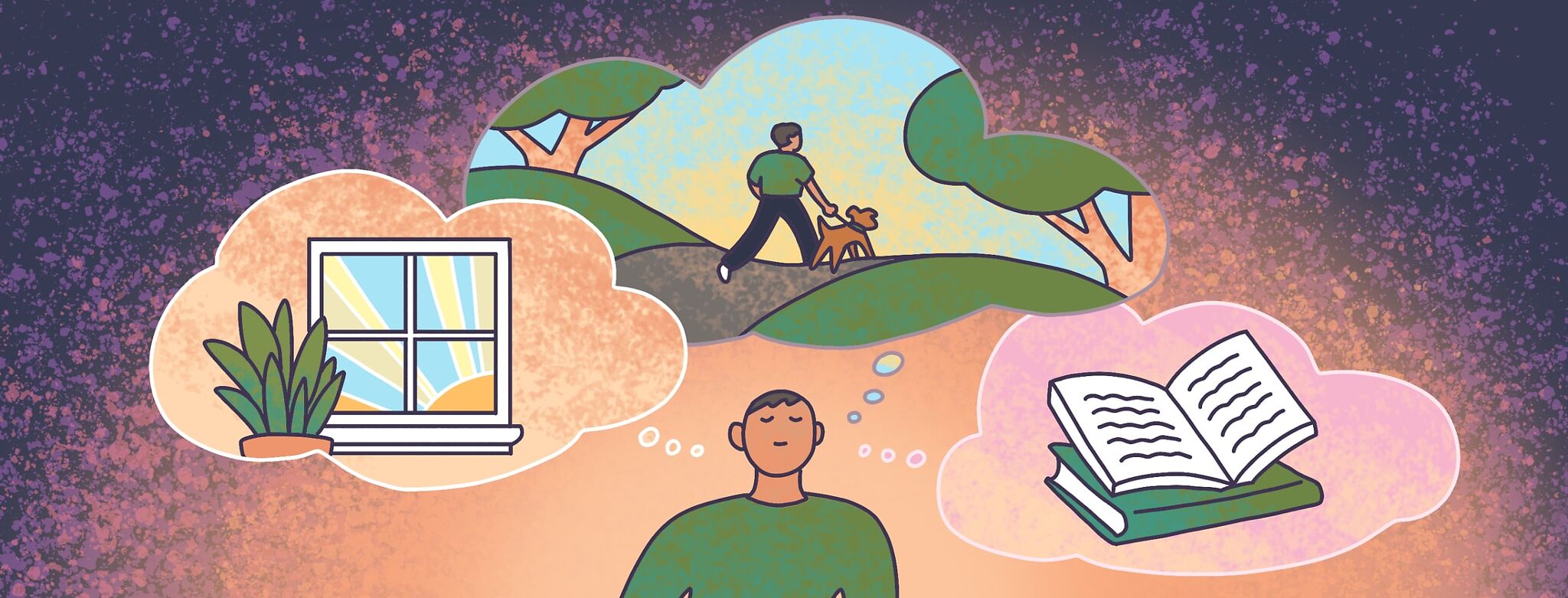
- Reclaiming my anchors: I started bringing back the things that ground me: reading a book, working in the yard, and walking my dogs. I found new routines, like standing at a window first thing in the morning instead of immediately opening my phone.
- Using technology to fight back: My phone also helped me to fight my intrusive thoughts. I took pictures of my patio door closed and myself taking my pills. Then, when an irrational fear appeared, I looked at the pictures and stopped worrying about it.
- Questioning my thoughts: During the day, as other worries came into my head, I asked, "Is this real or something you are imagining?" Most importantly, I accepted that worrying about a test result will not change it, and I should be happy that I am in a place where answers are provided to me. In essence, I learned to express gratitude for the test.
I still struggle with intrusive thoughts and irrational fears. But I have set up enough processes and new routines to give me the support I need. The world is no longer about what could happen to me, but about having hope in what is yet to come.
Join the conversation