

My PhD: A "Personal History of Disease"

When people see the committees and advisory boards I’ve served on, the conferences where I speak, or the research protocols I review, they sometimes assume I have a doctorate in medicine or science. I smile and tell them, "I do have a PhD, a 'Personal History of Disease.'"
How a cancer diagnosis became my unofficial education
I didn’t earn it in a classroom. I earned it in hospital rooms, infusion centers, operating rooms, waiting rooms, and countless follow-up appointments. My education came from hearing the words, “You have cancer,” not once, but multiple times. It came from learning medical terminology I never expected to know, navigating difficult treatment decisions, and discovering what it means to live with a hereditary cancer syndrome that requires lifelong vigilance.
No one applies for this degree. None of us hopes to earn it. My education began when I was diagnosed with stage 3 colorectal cancer. Suddenly, words like colonoscopy, pathology, staging, chemotherapy, side effects, and survivorship became part of my vocabulary. Five years later, another chapter was added when genetic testing revealed that I had Lynch syndrome, an inherited condition that increases the risk for several cancers. That knowledge helped explain some of my history, but it also meant understanding what the diagnosis could mean for my family.

Then came endometrial cancer and, later, basal cell carcinoma. With each diagnosis, my unofficial “coursework” continued. But this education has never been only about learning medical terminology. Cancer taught me about uncertainty. It taught me what it feels like to wait for biopsy results and how slowly time can move when the answer on the other side of that wait could change your life.
What cancer taught me beyond medical terminology
It taught me about the financial costs that continue long after treatment ends. It taught me about survivorship, family risk, genetic testing, clinical trials, and the importance of asking questions, even when you’re afraid of the answers.
Eventually, I learned something else: my experiences had value beyond my own medical care. Every patient accumulates knowledge that cannot be found in a textbook. We understand the anxiety that builds before a scan. We know what it is like to sit across from a physician trying to process unfamiliar terminology while simultaneously thinking about our families, our jobs, our finances, and our futures. We know that a consent form may be scientifically accurate and still be difficult for a frightened patient to understand.
Why patient experience is a form of expertise
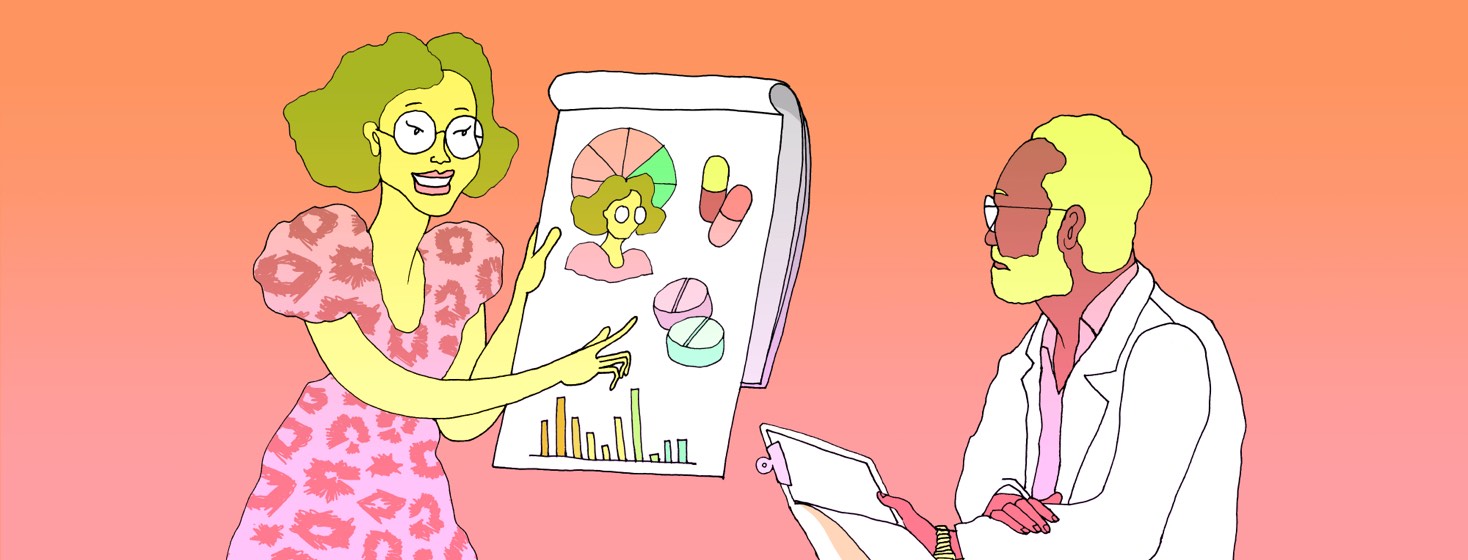
Those experiences are data of another kind. Today, I have the privilege of working alongside researchers, physicians, scientists, and healthcare leaders. I review clinical trial protocols and informed consent documents, serve on advisory committees, evaluate research proposals, and speak with investigators about designing studies that better reflect patients’ needs.
I’ve even participated in a cancer prevention clinical trial myself, giving me another perspective, not only as an advocate reviewing research from the outside, but as a participant experiencing research from the inside. I don’t contribute because I know more science than the scientists. I contribute because I know something different.
Researchers bring scientific expertise. Clinicians bring medical expertise. Patients bring lived expertise. The strongest healthcare and research happen when those perspectives come together.
Turning lived experience into patient advocacy
My journey has taught me that patient experience should not simply be a story told after the research is complete. Patients can help shape the questions being asked before a study begins. We can identify burdens researchers may not recognize. We can help make informed consent more understandable. We can ask whether an outcome being measured is actually meaningful to the person living with the disease. And sometimes we can ask the simplest but most important question: “What will this mean for the patient?”
Why patient voices belong at the research table
My “PhD” will never hang on a wall. There is no diploma, graduation ceremony, or academic title attached to it. And I would never compare my lived experience with the years of formal education and training required to earn an actual doctorate.
They are different forms of expertise, and that is precisely the point. My degree is reflected instead in every conversation where a patient perspective changes a decision, every research proposal strengthened by patient input, and every patient whose voice is heard because an advocate had a seat at the table.
The degree that will never hang on a wall
If my personal history of disease has taught me anything, it is this: Disease changed my life. Experience educated me. Advocacy gave that education purpose.
Perhaps the greatest lesson of all is that every patient carries knowledge worth sharing. When we recognize lived experience as a form of expertise, we don’t diminish science. We strengthen it. And that’s a degree worth putting to work.
Join the conversation